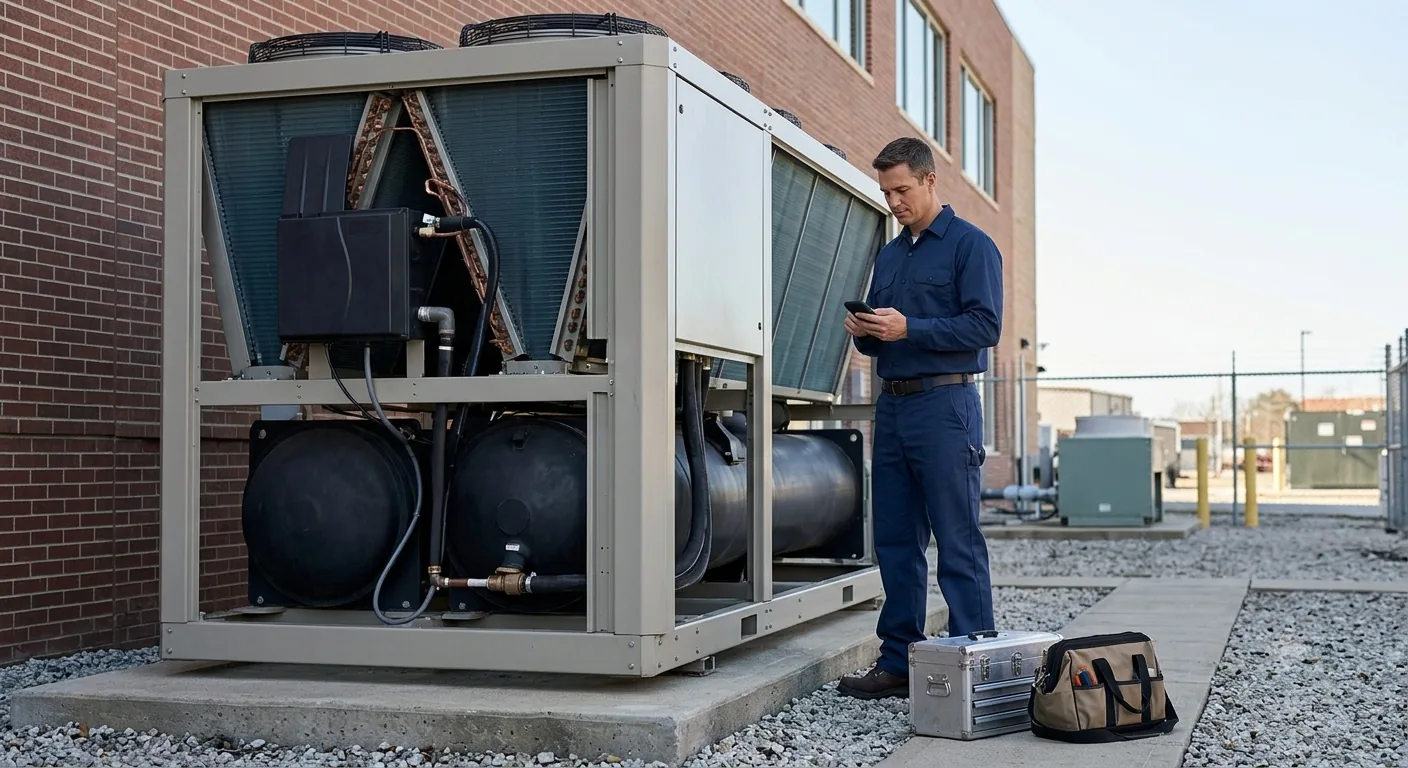
Field service organizations run on a simple promise: the right engineer shows up, does the job, and it gets billed correctly. In practice, that promise breaks in predictable places — a job assignment gets missed because it was communicated by phone and never logged, a calibration deadline slips because nobody was tracking it proactively, or a bill gets disputed because there's no record of what was actually done on-site. Evaluating field service scheduling and billing software means checking specifically for the places this tends to break, not just the feature list on a vendor's homepage.
None of these are people problems. They're visibility problems, and they show up whenever job assignment, status updates, and billing live in disconnected systems — or in no system at all.
Where Field Service Operations Actually Break Down
Job assignment with no record. When jobs get assigned over a phone call or a message, there's no single source of truth for who's doing what, and reassignment when an engineer is unavailable becomes a scramble instead of a two-minute update.
Status that only updates when someone remembers to report it. If an engineer's job status only reaches the office at end of day — or not at all — the admin dashboard is always describing yesterday, not right now.
Missed calibration and contract renewals. Service contracts and equipment calibration have hard deadlines. Without a system proactively flagging what's coming due, these get caught reactively — usually when a customer calls asking why their equipment wasn't serviced on schedule.
Billing disconnected from job records. If billing happens separately from the job record, disputes are hard to resolve, because there's no attached evidence — no photos, no timestamps, no clear record of what stage the job actually reached.
No distinction between job types in billing. A job where the engineer attended but couldn't complete the work (parts unavailable, access denied, additional approval needed) is a different billing event than a completed job. Software that doesn't separate these forces manual correction after the fact.
What Field Service Scheduling and Billing Software Needs to Solve
A mobile app engineers will actually use. If engineers can't easily update status, attach photos, or mark a job started and completed from their phone, the system will always lag reality. The app needs to be built for someone standing at a job site, not someone at a desk.
Real-time sync between engineer and admin. When an engineer taps to start a job, that should lock the in-time and immediately reflect on the admin dashboard — not after a manual sync or an end-of-day report.
Proactive deadline alerts. Calibration expiry and scheduled service visits should trigger reminders automatically, with enough lead time to actually act — not surface as a problem only after the deadline has passed.
Separate billing logic for attend vs. complete. Bills generated from an "attended but not completed" job and a "completed" job are different documents, generated automatically based on the actual job outcome, not reconstructed manually afterward.
Role-based access. Admins, super admins, and engineers need different visibility — who can download bills, who can view customer location data, who can reassign jobs. Without this, either everyone sees everything (a data exposure risk) or the system is so locked down it slows people down.
Photo and video evidence tied to the job. When a bill or a completed-job status is disputed, the fastest resolution is evidence attached directly to that job record — not a search through someone's phone gallery after the fact.

What This Looks Like in Practice
A service organization running this well can answer, at any moment: which engineer is on which job, whether any equipment's calibration is approaching expiry, and whether every completed job this month has a matching, correctly-typed bill. None of those should require a phone call or a manual cross-check to answer.
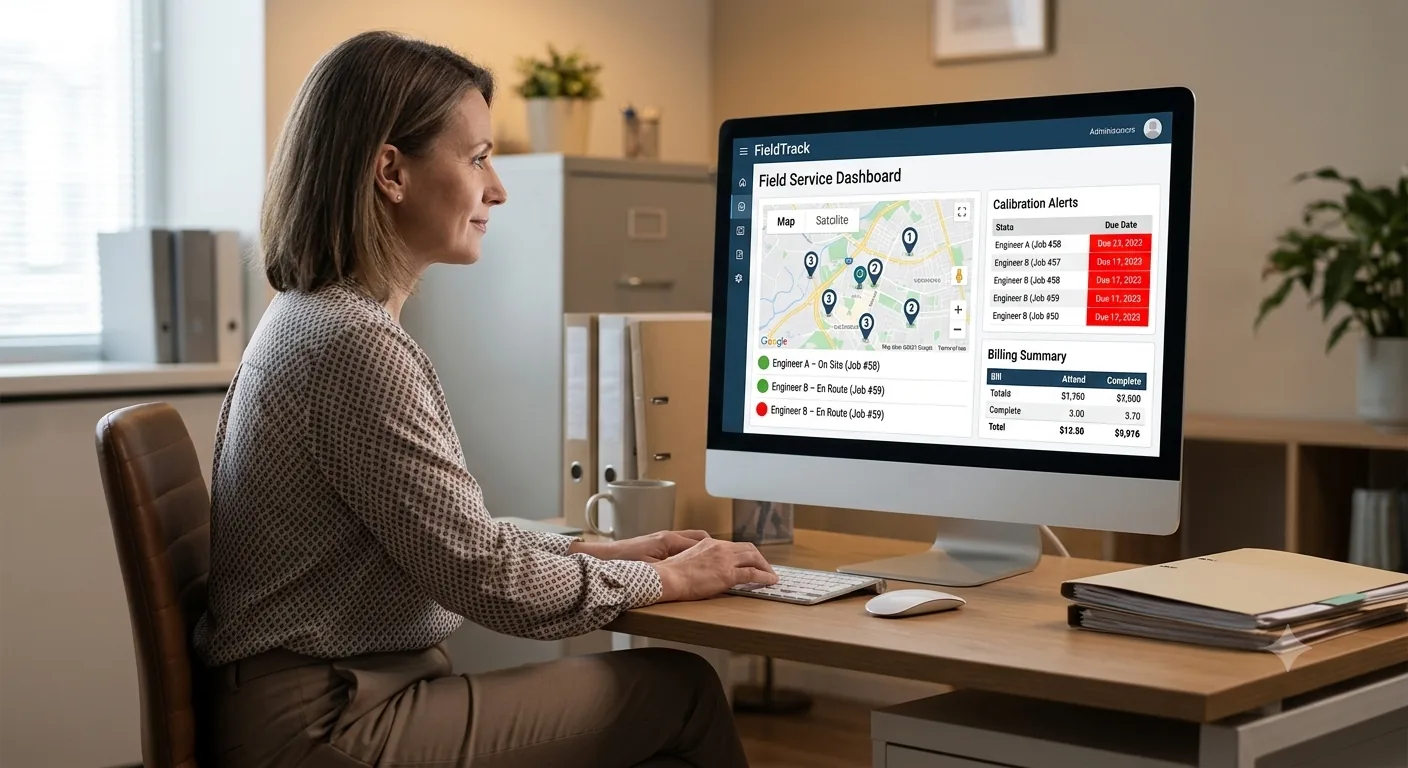
We built FieldTrack around exactly this: an admin dashboard and an engineer mobile app that stay in sync in real time, calibration and contract reminders that fire automatically ten days ahead, and billing that's generated directly from job outcome rather than reconstructed after the fact.
If your current process depends on someone remembering to check a calendar, chase a status update by phone, or manually reconcile bills against job notes, that's the exact gap a purpose-built system is meant to close.
Ibistra Tech builds FieldTrack, a field service and inventory platform. Talk to us about your field operations.